Homeowners insurance

Homeowners insurance can be personalized so that you have the exact coverage you want, or that is required by your mortgage company or HOA. This customization includes things like adding or forgoing certain coverages and choosing between having the replacement cost or actual cash value of your possessions covered.
Another item you can customize is your deductible. We’ve talked about keeping a too-high deductible in the past and that while it will lower your premium, it can really cost you in the long-run. But what is a deductible, how does it work and how do you know if yours is too high?
Let’s answer some common home insurance deductible questions and help you determine what is right for you now and what that means for you later.
A homeowners insurance deductible is the amount of money you’re expected to pay toward a claim before your insurance company pays. Let’s look at some examples.
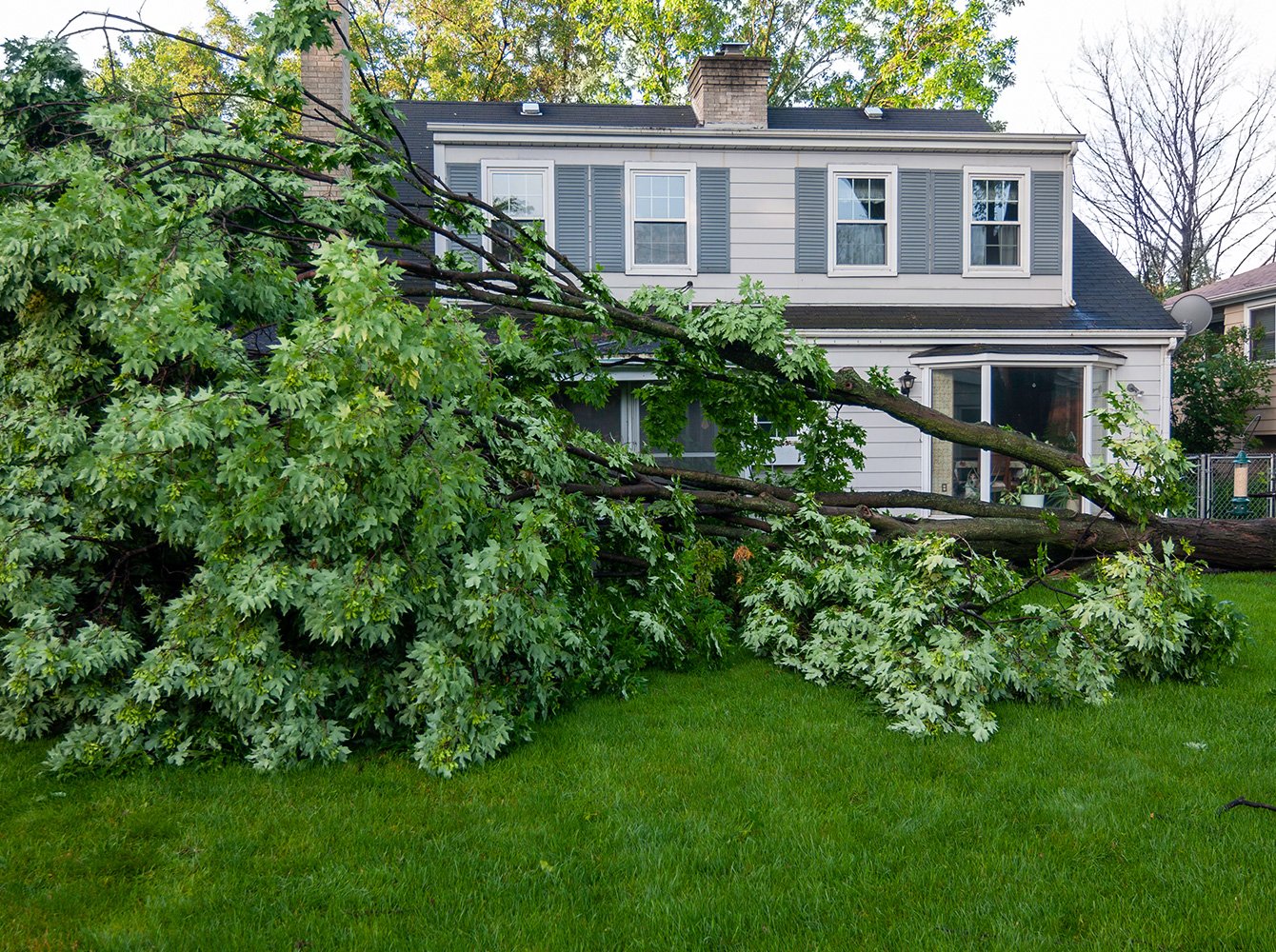
Scenario 1 – A windstorm causes a tree branch to break off and go through your window. You’re quoted a repair cost of $700 and decide to use that contractor. You have a $500 deductible on your homeowners insurance policy. In this situation, you would pay $500 and your insurance company would pay $200.
Scenario 2 – A burglar breaks in and steals $200 worth of art. You still have your $500 deductible. In this case, your insurance company wouldn’t pay anything. Your deductible amount is higher than the damages, so you’d be fully responsible for the cost of replacing the stolen art.
Scenario 3 – A fire breaks out and destroys your kitchen. You lose all of your appliances, food and even a wall. You are looking at $20,000 in damages. You would pay your $500 deductible and your insurer would pay the remaining $19,500. (This Scenario can be avoided by following our fire safety tips!)
There are two common types of homeowners insurance deductibles that you should know about.
The scenarios above were likely homeowners who had a flat deductible. This type of homeowners insurance deductible is the one that most people are familiar with. You’ll choose an amount that you’re comfortable with and that will be your out-of-pocket cost regardless of what damages you claim. Common amounts for this type of deductible are $250, $500 and $1,000. The amount you choose depends on how risk-averse you are. It’s worth talking to a VIU by HUB Advisor about your personal comfort with risk and what a change would do to your monthly premium payment to decide what flat deductible is right for you.
These deductibles are a bit more complicated. Rather than selecting the dollar amount you’re comfortable with for your deductible, your deductible is based on a percentage of the insured amount. Say your house is worth $500,000. If you have a 1% deductible, that equals $5,000. However, these can change. If your house value increases to $600,000, your deductible would then be equal to $6,000. These are most common for these types of losses:
There is a lot to consider here to be sure that you get the right coverage for you. There is no one-size-fits-all deductible. Here’s what we recommend that you consider.
You might want a low deductible but if you can’t afford the higher monthly premium payment that comes with that choice, you can’t do it. You can work with a VIU by HUB Advisor to explore what payment amounts correspond to what deductible amounts to find something that works for you. You can also look into other ways to lower your homeowners insurance premium without changing your deductible.
If you’re the type of person who gets travel insurance and avoids rollercoasters, you might be averse to risk. That’s fine! It likely means that you will want a lower deductible though. You will pay less if you need to file a claim, reducing your chance of huge surprise bills. You’ll pay for it by having a higher premium, but it could be worth it to know that you’re covered if something goes wrong.
On the other hand, if you’re the type of person who spends their year-end bonus on scratch-off tickets and rides a motorcycle 300 days a year, you might be more comfortable with a higher homeowners insurance deductible. You’ll have a lower premium as a reward. You could be responsible for a large bill when filling a claim, but with a little prevention you can avoid common claims.
Many policies offer flat deductible amounts in increments. Someone might decide that they want a deductible of $2,000. If their insurance company offers $1,000 or $2,500 and nothing in between, they’re out of luck and need to choose one. Or, they could consider a percentage based deductible if it gets them closer to the $2,000 that they want as a deductible.

Imagine expert advice, instant insurance quotes and all your policies, all in one place.
The deductible type and amount that you choose will have an inverse relationship with your premium. High deductibles mean low insurance premiums. Low deductibles mean high premiums. This is because a deductible is how a homeowner shares risk with the insurance company. To reward you for taking on some of the risk, insurance companies give you lower rates.
This is entirely up to you. The information above should guide you toward which is the right answer for you. If you’re still unsure what home insurance deductible is right for you, reach out the VIU by HUB Advisory Team. They can help you make sense of your options and what is right for you.
Typically your deductible is deducted from payments the insurance company pays you. Here’s an example: a meteorite fell onto one homeowner’s garage, and it needed to be replaced. This homeowner had replacement cost coverage, so they only had to pay their deductible to get a brand-new garage built. They were quoted at $30,000 to have it built. This homeowner’s deductible was $1,000. Their insurance company factored that into their payment and sent the homeowner a check for $29,000. That check plus the $1,000 deductible added up to exactly what the homeowner needed to pay for the new garage.
Sometimes! Waivers of deductibles are common in homeowners insurance policies. Check your policy to see if you have one. Here are the types of waivers to look for:
Some companies will allow you to buy a waiver of deductible, but pay close attention to these. If your deductible is $500 and the waiver costs $750, you’re not really coming out ahead. Read the full waiver text to know if it’s the right choice.
You may also qualify for a disappearing deductible. These are offered by some insurance companies and essentially are a way to reward loyal customers. With these programs, insurance companies lower the deductible for homeowners each year that they go without filing a claim.
We’ve talked a lot about home insurance deductibles, but we have good news for renters. Renters insurance deductibles work the same way as home insurance deductibles with a few minor differences.
Take a deep breath. You have options.
Check your contract – Do you have a deductible waiver that would kick in for this amount of damage? Do you have a disappearing deductible for homeowners insurance that would make your obligation lower than you think?
Consider not filing a claim – If your damages are small or you can live with it for a while, you can wait until you have the money to file a claim. Most homeowners insurance companies require you to report a claim in a timely manner so that a proper investigation can take place. What “timely” means can vary, so check your policy or talk to your homeowners insurance company to find out if this is an option for you.
Dip into your savings – This is what your emergency fund is for. If you’re like many Americans who don’t have one, look into other money you have saved. Do you have a vacation fund? A 401(k) that you could borrow against (a loan, not a withdrawal)?
Work with the contractor – Your insurer will pay the amount owed over the deductible amount. This may be enough to get started on repairs and you can work out a payment plan for the deductible amount.
Use your credit card – You know your finances. If you’re able to quickly recoup the money and pay off the credit card, it could be worth it in order to get the repairs done quickly. Don’t go into debt though. This suggestion is to get you through the next couple of weeks, not to carry a balance on your card for the next couple of years.
Talk to your bank – Look into a short-term loan. Again, this is a stopgap measure and not a good idea if you aren’t able to quickly pay it back.
Ask family or friends – It’s humbling for sure, but it’s better than living with a hole in the ceiling of your living room.
There are a lot of variables that go into homeowners insurance deductible amounts and usage, and it can be difficult to know that you’ve made the right choices about yours. With this guide and a little advice from your VIU by HUB Advisor, you can feel confident in the decisions you’ve made.
The VIU Point is here to help you make sense of it all, so you can confidently compare homeowners insurance quotes and make the best policy decisions.